

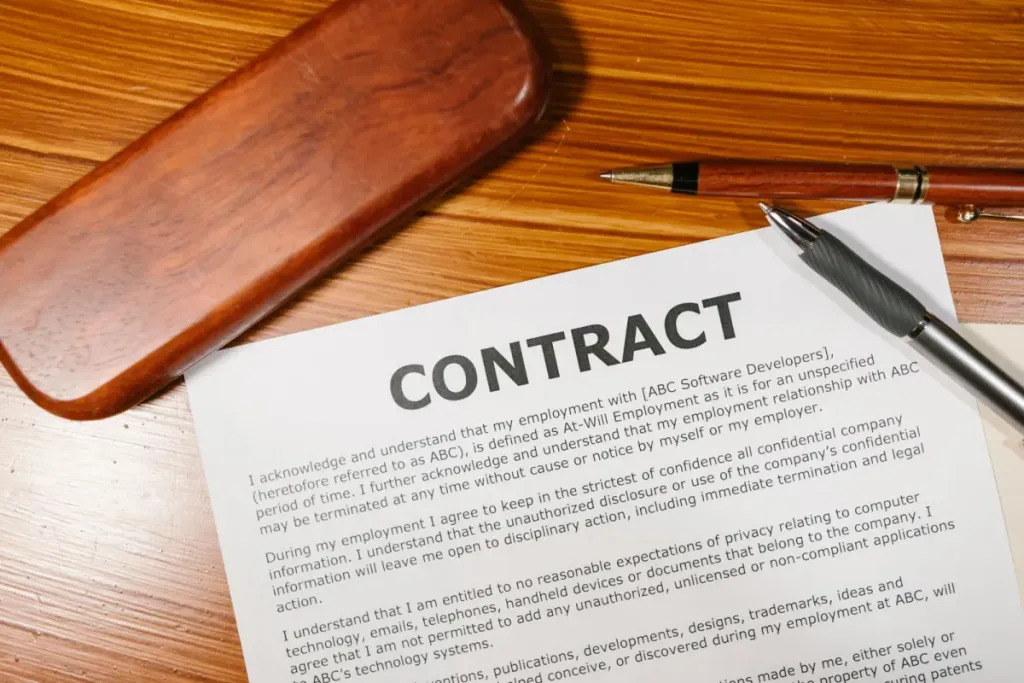
A commercial contract is the foundation of the relationship between the parties and the first point of reference when any disagreement arises. Even so, many people sign their contracts after a quick read that focuses on the price and the delivery period, without paying attention to clauses that may seem secondary but in fact determine who bears the risks and what happens if things do not go as planned.
In this article, we review the key clauses that should not be overlooked when reviewing commercial contracts before signing.
Why is a review worth the time and effort?
A carefully drafted contract protects both parties, reduces the likelihood of disputes and provides a clear way to deal with problems if they occur. A vague or unbalanced contract, on the other hand, may become a burden on one party or the source of a long dispute over the interpretation of its terms. The time a careful review takes before signing is far less than the time it may take to deal with the consequences of an ill-considered contract.
Key clauses that deserve attention
Identification and capacity of the parties
Make sure the parties' details are correct and that the person signing has the authority to sign on behalf of the entity they represent. A signature by someone without that authority may raise questions about whether the entity is bound by the contract.
Scope of obligations
The contract should define precisely what each party will provide: the specifications of the goods or services, quantities, quality standards, and the time and place of delivery. General phrases such as "as agreed" or "of suitable quality" without clear definition may open the door to disagreement.
Price and payment terms
Stating the price is not enough. The currency, payment dates and method should be specified, along with whether there are advance or milestone payments and the consequences of late payment. Attention should also be paid to taxes and fees and who bears them.
Warranties and guarantees
What warranties or guarantees does each party provide? They may include warranties on the quality of the product or service for a certain period, or financial guarantees for proper performance or for the refund of advance payments. Clarity about these guarantees and the conditions for calling on them protects the party that benefits from them.
Liability and its limits
Many contracts include clauses that cap one party's liability or exclude certain types of damage. These clauses can have a significant impact when a problem occurs, so they should be well understood and their balance assessed before they are accepted.
Force majeure and unforeseen circumstances
What happens if an event beyond the parties' control prevents or hinders performance? A good clause defines what counts as force majeure, the duty to give notice of it, its effect on obligations, and what happens if it continues for a long time.
Term, renewal and termination
Specify when the contract begins and ends, whether it renews automatically, the circumstances in which each party may terminate it, the notice required before termination, and its consequences, such as settling amounts due and returning documents or assets.
Confidentiality
If the relationship involves exchanging sensitive commercial or technical information, a confidentiality clause becomes essential: What information is covered? Who may access it? How long does the duty of confidentiality continue after the contract ends?
Governing law and dispute resolution
Specify the law governing the contract and the method that will be used to resolve any dispute: Is it the courts, and which court? Or arbitration? Is there a negotiation or mediation stage first? The absence or vagueness of this clause may add a procedural dispute to the original one.
Warning signs during the review
- Clauses that give one party broad rights without a corresponding obligation on the other.
- References to annexes or general terms that are not attached to the contract.
- Contradictions between clauses, or between the contract and its annexes.
- Undefined terms that could be interpreted in more than one way.
- Deadlines or obligations that are difficult to meet in practice.
Keep track of versions and changes
During negotiations, a contract may go through several drafts exchanged between the parties. It is important to keep track of each version and the changes made to it, and to make sure that the final signed copy is the one that was actually agreed. Changes made at the last minute, or accepted without a careful read, are a common source of later disagreement. It is equally important that every annex, schedule or attachment referred to in the contract is finalized, attached and signed together with it.
Negotiation is not confrontation
Reviewing a contract does not mean rejecting it or entering into conflict with the other party. It means understanding what you are committing to and negotiating, professionally, the changes that are needed. Many parties accept reasonable amendments that make the contract clearer and more balanced, because ultimately they protect both sides.
How can we help?
At Abu Hussien Law Firm, we draft and review sale, supply, distribution, agency, services, construction, partnership and other commercial contracts, and support clients in negotiating obligations, guarantees, payment terms, termination and dispute resolution. You can learn more about our commercial contracts and transactions services.
Conclusion
Signing a contract is the moment when promises become obligations. Reviewing the contract carefully before that moment is the simplest and most effective way to protect your interests. If you have a commercial contract that needs to be reviewed or drafted, you can request a consultation.